This article is part of The D.C. Brief, TIME’s politics newsletter. Sign up here to get stories like this sent to your inbox.
It’s been an article of faith that Donald Trump has a vise-like grip on his Republican Party. Those who defied him found themselves vanquished. Rare was the candidate he opposed who could weather his contempt: Gov. Brian Kemp survived in Georgia, where he tested his supremacy over the MAGA wing of the party in 2022; Sen. Lisa Murkowski defeated a ranked-choice challenge from a fellow Republican and Trump-backed contender that year; Rep. Nancy Mace of South Carolina prevailed in a Trump-led primary against her then, too.
But, by and large, a Trump blessing has been more than sufficient to sideline heretics to the cult of Trumpism. In 2022, as an ousted ex-President, Trump still posted an enviable record: 93% of his candidates made it through the primary and 83% of them won in November that year, according to Ballotpedia. Two years later, those numbers were 96% and 89%.
For a decade now, it seemed like the GOP ecosystem was one entirely at his mercy. But May’s primary calendar sets up three big tests of Trump’s influence—each of which carries a central question Republicans are anxious to see answered.
INDIANA: How much do GOP voters care about redistricting?
Trump thought he could lock down a few more U.S. House seats in this deep-red outpost in an otherwise fertile heartland for swing voters. Last year, he hectored state Republicans to make use of their supermajorities in the legislature to redraw the political lines to eliminate two safe Democratic seats. Those Republicans refused, despite White House invitations and invectives. Trump twice dispatched Vice President J.D. Vance to the state to the same result.
So in the face of a rare rejection from members of his own party, Trump endorsed primary challengers to eight GOP state Senators who voted against the redistricting measure.
In one sense, the outcome in Indiana doesn’t really matter. According to folks who watch these races closer than their bank balances, Trump’s revenge campaign will yield at best a five-seat gain for his preferred conservatives in the Indiana state Senate, where Republicans already have a 40-10 split. This is ultimately a petty fight about the Old Guard not being ready to cede to the invading MAGA-pilled horde. They don’t disagree on anything in the state, just Trump’s ability to color the conversation.
Nonetheless, some of Indiana’s best known Republicans are picking sides, including Trump’s first Vice President, former Indiana Gov. Mike Pence, who still carries weight at home. He and his allies are trying to stop this because it is a long-term bad bet for Indiana Republicans.
“I would simply defer to the state legislatures and the governors to determine what they think is appropriate … whether it be in Indiana, Texas, California or anywhere else,” Pence told Meghan McCain at an event at Harvard last year.
It’s an evolutionary change between the old-school Hoosier Republicans like Pence and former Indiana Gov. Mitch Daniels, who collaborated with the Democratic Bayh family—”the Kennedys of Indiana,” as one source from my days as a reporter at The Evansville (Ind.) Courier & Press put it.
In the opposite camp are those like current Gov. Mike Braun, a former Senator who watched the MAGA metastasize in Washington and beyond. He tried and failed to get enough of his fellow Republicans to get behind Trump’s map redraw scheme, which would give the GOP all nine of Indiana’s seats in the U.S. House, despite Kamala Harris winning 40% of the vote in 2024, Joe Biden winning 41%, and Hillary Clinton winning 38%. (For comparison, Indiana is the mirror image politically of blue-leaning Massachusetts.)
Trump and his allies are all-in with Indiana: $8 million and counting on TV ads, plus millions more in digital and mail—yes, mail still works with Indiana’s older GOP base. And to be clear: these races for typically state Senate are sleepy affairs. (The current Senate president pro tempore won his last election with about 50,000 votes.) This isn’t about Trump’s primacy; it’s about his ego.
The primary is May 5.
KENTUCKY: Can Thomas Massie beat Trump by ignoring him?
No one can accuse Rep. Thomas Massie of Kentucky of being anything but a hard-nosed conservative. Except Trump.
Massie’s most infamous moment, as I wrote years ago,
“came in March 2020, during those first chaotic weeks of the pandemic, when he refused to allow members to pass a COVID-19 relief spending bill that had broad support without first pushing for a recorded vote on where every member stood. His move failed as a procedural matter, but it forced many members to return to the Capitol to prove there was a quorum for a legitimate vote. The unnecessary move so angered Trump that he tweeted the GOP should kick him out of the party. (Still, Trump loves a guaranteed winner; on May 10, [2020,] when it was clear Massie was going to win his primary in a strongly Republican district, Trump endorsed him for re-election, a move that helped Massie this week to claim the nomination with 75% support from fellow Republicans.)”
He proceeded to win another term with a 2-to-1 margin in the general election.
But Massie is also no one’s errand boy. He can be an unrepentant jerk. He was the lone dissent in a 2022 vote to condemn anti-semisitism. He was on his own in opposing support for Ukraine in its defense against a Russian invasion. Massie doesn’t like being taken for granted. In a chamber that hinges on the whims of a handful of partisans, Massie and his pals can derail the White House, effectively proving they’re more consequential than the Speaker or even the President. Yet these absurd side-quests leave White House political hands chasing evidence they can present to Trump that they’re making Massie squirm. It’s why the outcome of Trump’s crusade against Massie’s re-nomination matters. The two men don’t disagree. They just don’t come at the questions with the same lens.
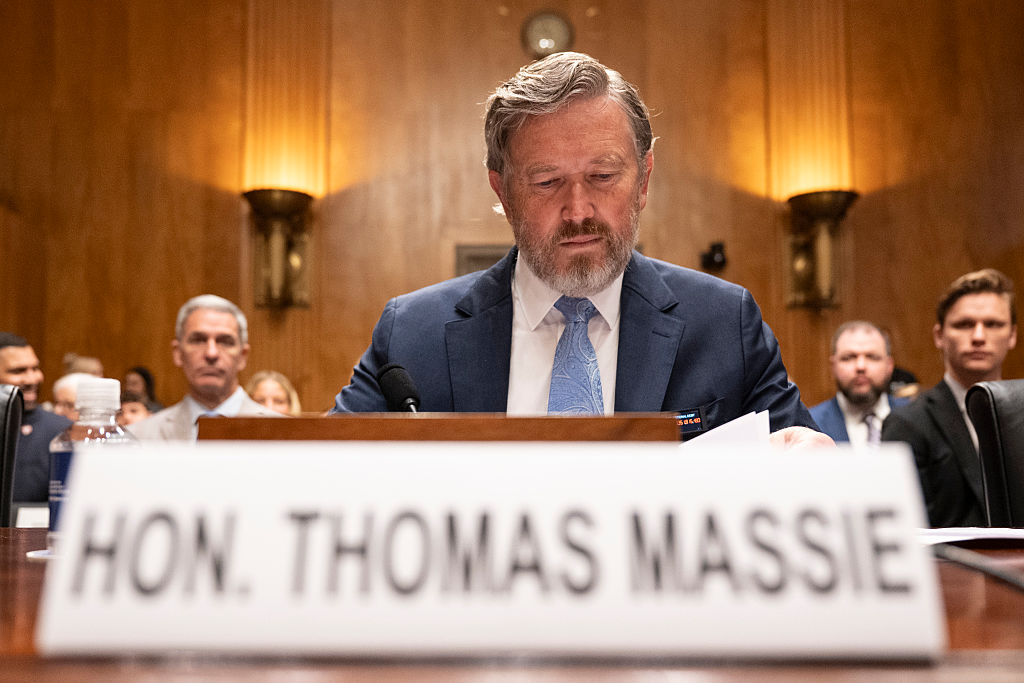
Massie, a seven-term House Republican, seems to be indifferent to the rage. He barely blinked last year when Trump visited his district and effectively accused Massie of treason. “He’s disloyal to the Republican Party. He’s disloyal to the people of Kentucky,” Trump said. “And most importantly, he’s disloyal to the United States of America, and he’s got to be voted out of office as soon as possible!”
Trump endorsed Massie challenger Ed Gallrein before he even got into the primary. “RUN, ED, RUN,” Trump posted on his social media page. Five days later, Gallerian got it. Massie did not waver.
The latest vote is May 19.
TEXAS: Can Washington Republicans keep Trump neutral?
Talk to any Republican with a meager credential in Washington and this is the race that has them bordering on asthma: If Trump keeps his powder dry before the state’s May 25 primary runoff, it will give Sen. John Cornyn his best chance at not only holding on to his seat, but keeping it in the red column. The other possibility is the President leads with his petulance and backs state Attorney General Ken Paxton, whose oppo file is not small.
All the while, Democrats are watching James Talarico patiently waiting for Republicans to sort themselves out while he emerges as one of the best fundraisers of the cycle, raising hopes that he may end the nation’s longest blue-team dryspell by becoming the first Democrat to win a statewide race in Texas in three decades.
It’s no secret that Trump has little love for Cornyn. The Texan, a close ally of former Majority Leader Mitch McConnell, is a loyal Establishment Republican and a major player in the modern history of the Party of Lincoln. Cornyn is a huge fundraising force, having run the official campaign arm of the Senate GOP. He knows Texas oil money. He has the backing of just about every incumbent and former Republican Senator and has an alumni network rivaling the legends of his party’s leadership. Still, Trump keeps flirting with the scandal-soaked Paxton, who can’t shake the stench of trouble.
Even so, Talarico might be the Texas Unicorn that Democrats have been seeking for decades. (To appreciate his talents, check out my dispatch from February about his faith-driven crusade.)
Institutional Republicans are cheering on Cornyn for a fifth term. Yet he struggled in a three-way Republican primary, snagging just 42% of the vote against Paxton’s 41%. (A third candidate, Rep. Wesley Hunt, logged 14%; D.C. insiders from both Cornyn and Paxton camps today openly muse why Hunt thought a Trump endorsement was in the offing.)
Cornyn and Paxton face each other on May 26 for a GOP runoff.
Two other primaries to watch: Georgia and Louisiana
Georgia is one of Republicans’ best pick-up chances. Louisiana is one of their safest holds. And, yet in both, party insiders are dreading the impact of the White House.
A three-way race in Georgia is leaving the Republican Party without a nominee at the moment. Congressmen Buddy Carter and Mike Collins are the favorites of the Washington crowd. Former Tennessee Vols’ coach Derek Dooley is in the mix, too, and seems to have Trump’s interest. Party insiders say none appear unelectable, unlike the 2022 chaos that came when former NFL star Herschel Walker won the Senate nomination only to be dogged for months with embarrassing stories. (After Walker lost a winnable Senate seat, Trump named him the United States’ ambassador to the Bahamas.) A collaborative cross-vetting confirmed none of the three current candidates are disasters, and the timbre is one of rivalry and not scorched earth.
Still, each of those three main rivals is vying to face off against incumbent Sen. Jon Ossoff, one of the most charismatic candidates anywhere on the map and a potential frontrunner in the 2028 veepstakes. Ossoff is the second most prolific fundraiser in hard dollars in any in-cycle race this quarter, behind only Talarico. He’s raised almost $14 million, while his GOP rivals have raised a combined $2 million. (But let’s not sleep on super PAC and allied campaign accounts. Dark and grey money still can make a difference.) Georgia’s primary is on May 19. If none of the three candidates win a majority of Republican votes, the runoff will be June 16.
Meanwhile, over in Louisiana, it’s equally as messy for Republicans. Sen. Bill Cassidy is among the most solid Republican lawmakers from the South. He’s a moderate from The South, one of the seven Republicans who voted to impeach Trump in his second impeachment trial and later called on Trump to drop out of the race after it became clear that the allegations of Trump taking classified documents from his first term to Florida were going to dog him. Still, Cassidy—a doctor—looked past his own deep reservations about Trump’s second-term pick to be Health and Human Services Secretary, Robert F. Kennedy Jr., voting him out of committee. The move of early-Trump 2.0 fealty won him zero chits. Trump is backing Cassidy’s back-bench rival in another three-way race.
The last time a Democrat won a Senate race in Louisiana was 2008. The primary is May 16 and a runoff is scheduled for June 27 if no candidate wins the majority. Republicans here on Capitol Hill think they’ll keep the seat either way. They’d rather do so with Cassidy.
Make sense of what matters in Washington. Sign up for the D.C. Brief newsletter.
The post Trump’s Grip on the Republican Party Faces 3 Big Tests in May appeared first on TIME.