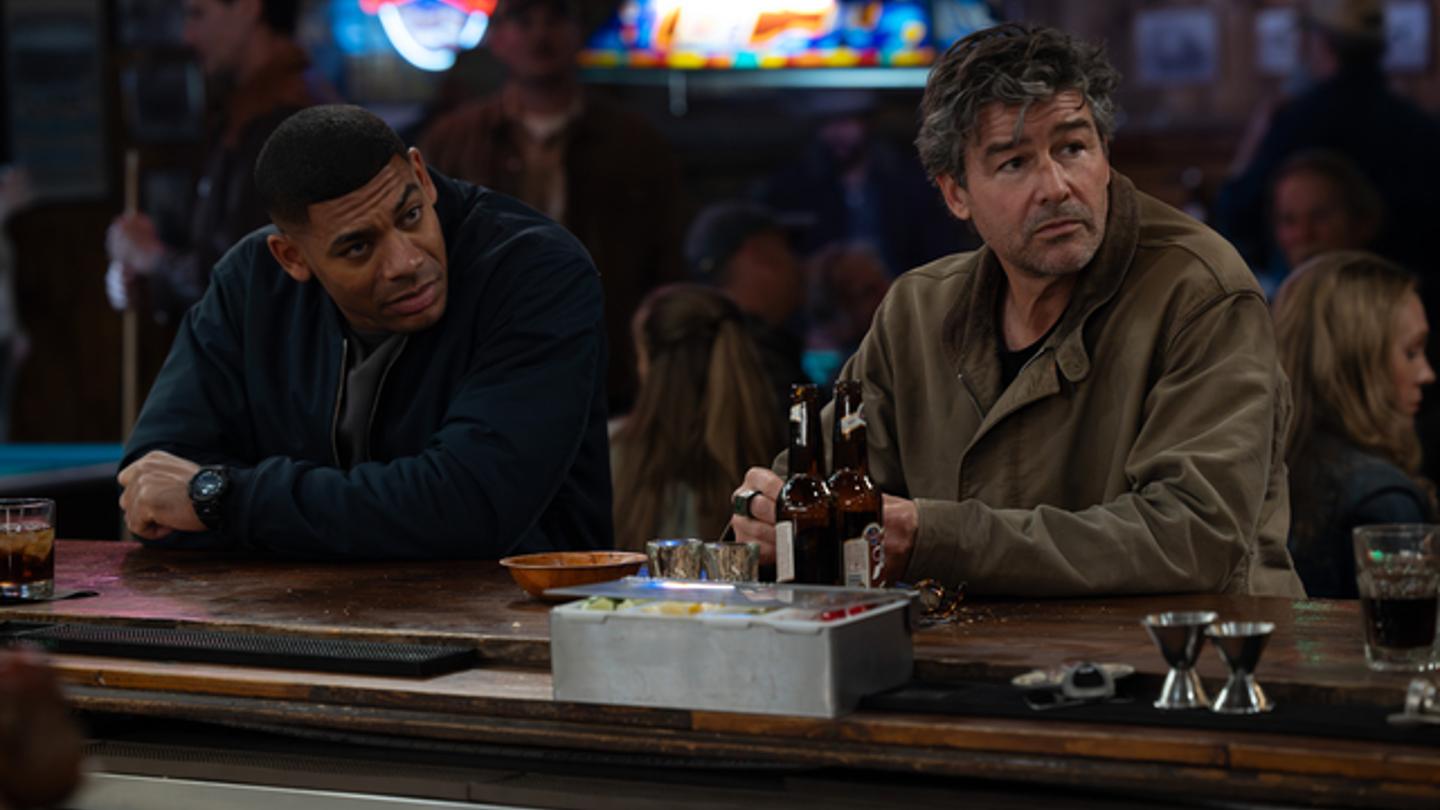
“Are you afraid?” This is the tagline of the HBO drama Lanterns, a prestige take on the Green Lantern that is part of James Gunn’s reimagined DC Universe. Early in the premiere, we hear both of the show’s lead characters respond in the negative. Kyle Chandler’s Hal Jordan, the first of the intergalactic cops known as Green Lanterns recruited from Earth, is on TV explaining that his military-pilot father died in a plane crash when he was eight—and when you lose parents at that age, nothing will ever scare you again. Watching this interview in his modest home is a young John Stewart (Cairo Cash Lee). Soon, his own dad, also a military man, takes John to the backyard, places an apple on his head, aims his gun, and asks the boy if he is afraid. John declares that he is not. It will take several episodes to discover why he is so unnervingly calm.
Fear is indeed a central theme of Lanterns, which premieres on Aug. 16, but not in the macho, who-blinks-first sense you’d expect from a superhero show. Created by crime drama specialist Chris Mundy (True Detective, Ozark), TV eminence Damon Lindelof (Lost, The Leftovers), and Eisner-winning comics writer Tom King, it juggles their different strengths and points of view with mixed success. At its most ambitious, the series allegorizes John and Hal’s disparate relationships to fear as a younger Black man and an older white one. Privilege, insiders vs. outsiders, and the brutal clarity with which disadvantaged people see the societies that devalue them come into play. Parallels to Lindelof’s great 2019 DC adaptation Watchmen abound. Like the latter, Lanterns is smarter, more mature, less formulaic, and more stylishly made than the identikit Marvel brand extensions that are now the industry standard. Yet it’s missing the history and personality that gave Watchmen its power. The philosophical qualities that define Lindelof’s best work, as well as his stories’ exhilarating strangeness, get lost in the jumble of voices.
While the show fluidly traverses the years before and after it, dropping in on Hal and John at key moments in their lives, the investigation that puts the two men in buddy-cop mode unfolds in 2016, two decades after the William Tell scene. A grumpier, more grizzled and gray-haired Hal is supposed to be training John (played as an adult by Aaron Pierre), now a strapping and serious ex-Marine, to be his backup. But they haven’t exactly bonded. Hal, who can still be charming when wants to but also has the arrogant swagger of a once-great, past-his-prime athlete who refuses to retire, insists he doesn’t need help. John silently disdains Hal’s entitlement, the ease with which he approaches a job that would be the honor of John’s life.
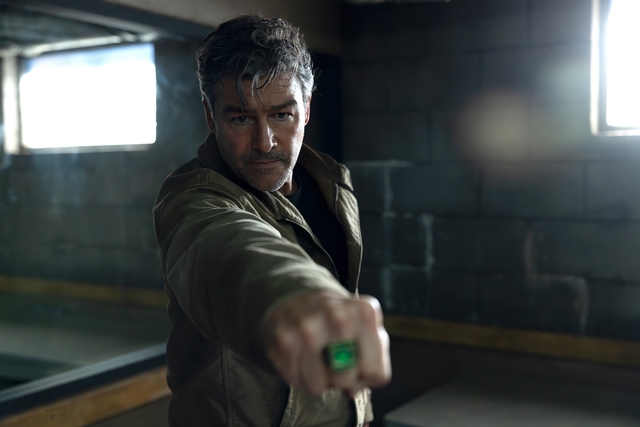
Although Hal’s remit encompasses the entire interplanetary backwater that includes Earth, Lanterns takes place mostly in the rural American town of Rushville, Neb. In response to a cryptic message, Hal rockets to Rushville—literally, because his ring gives him the power of flight—arriving to a murder scene and leaving a confused John to follow by plane. (Said scene is a football field. The town’s residents are obsessed with the sport, in an eerie callback to Chandler’s career-defining show, Friday Night Lights.) The spoiler-adjacent details of the murder are less vital than the True Detective shape the eight-episode season takes. (I was able to screen seven.) If you didn’t know Mundy was the showrunner, it wouldn’t be hard to guess.
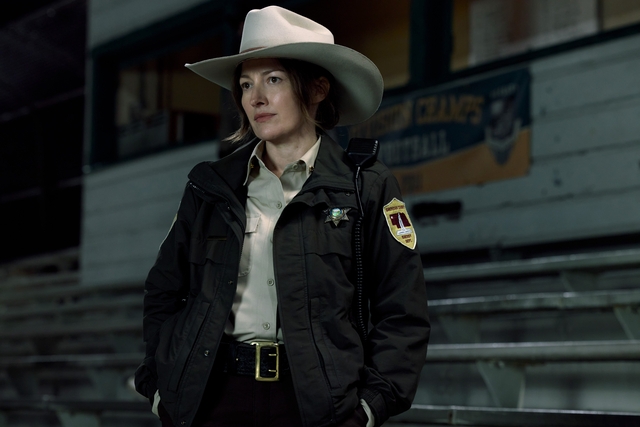
The odd occurrence at the football field also introduces us to Rushville’s most prominent family, the Macons. Boardwalk Empire alum (and recent Dept. Q standout) Kelly Macdonald returns to HBO as the local sheriff, Kerry. Adamant about keeping the case under police control, she also quickly establishes a flirtily antagonistic rapport with Hal. Her father-in-law, William Macon (Garret Dillahunt, looking only a few years older than the actor who plays his insecure lawyer son, Jason Ritter), who controls a vast cattle ranch, intimates that he has political interests relevant to the Green Lantern. The patriarch’s wife, Zoe (Deli Boys revelation Poorna Jagannathan), lives by her own set of rules, which John accidentally discovers when she picks him up at a bar. Only after their hasty hookup does he meet her husband. Whether the Macons will turn out to be allies, enemies, or some of both to the Lantern and his trainee—who aren’t such a united front themselves—is one early question. Contrary to the superhero genre’s typical good-vs.-evil binary, everyone’s allegiance feels murky or mutable. What it would mean for any character to do the right thing depends on how you look at their situation.
Lanterns strays pretty far from its setup, as Lindelof shows tend to do. He knows how to build suspense by scattering expositional holes throughout a series and still avoid ending up with a Swiss-cheese plot. The show certainly earns its plural title, eventually adding Nathan Fillion’s Guy Gardner (as seen in Superman and Peacemaker) and Ulrich Thomsen as Lantern turned villain Sinestro, to the dysfunctional space-cop family—and underlining that John is its only Black member. Its real interest, though, seems to lie beyond both DC Universe lore and the procedural tropes of the rural murder investigations that occupy most of its runtime.
Just as Watchmen used police, supernatural powers, and the tragic heritage of the Tulsa race massacre to interrogate how the violent history of institutional racism persists in the present, Lanterns makes John and Hal avatars for competing visions of heroism shaped by systemic forces. There are generational overtones to this conflict as well as racial ones. Hal looks comfortable zooming around in the Green Lantern suit—and is fiercely protective of his right to keep it, even if he rarely bothers to wear it anymore—but didn’t do much to earn it. The irony inherent in their apprenticeship is that John, an overeducated, overqualified Black millennial who possesses every skill a Lantern could conceivably need, has already spent his entire life training to do what Hal does. He even has the artistic chops required to shape the ring’s green beams into anything he needs for any situation. (Hal uses it to counterfeit a dollar for a bar jukebox. Later, he calls into question John’s creativity.) And he still might never get the job.
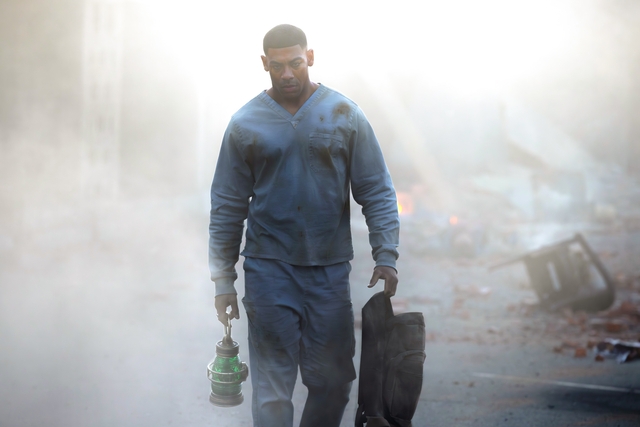
I wish the creators had trusted Pierre to convey as much. Instead, the show repeatedly explains obvious and banal takeaways when it could be pushing us in provocative, novel, and, frankly, more entertaining directions. One rough episode (among other scenes) drags us through John’s past, making his backstory an object lesson in racial politics and the burden of Black excellence so trite, it seems beamed in from a different universe than Watchmen’s historically engaged critiques. “Do you understand how unfair it is to ask a Black man in America if he’s afraid?” one character demands, long after the point has been duly made. Lanterns does finally get to a more sophisticated place midway through the season, casting new shades of meaning on its John-Hal dichotomy through secondary characters, their varied relationships with fear, and the passage of time. There’s reason to hope the finale will continue this trajectory, and that the series could really take off in a second season, should HBO decide to make one.
But for now, the heady, political, Lindelofian stuff never quite melts together with the small-town detective stuff, which is too inherently austere to accommodate the co-creator’s maximalist sensibility. The show teases but doesn’t sustain the exuberant weirdness of Watchmen, with its squidfalls and blue-man sexuality, or Lindelof’s nun-vs.-AI romp Mrs. Davis. There’s less grand-scale spectacle, too, than you’d expect from this combination of talent, IP, platform, and placement (Lanterns inherits House of the Dragon’s prime Sunday-night slot). That isn’t necessarily bad; I prefer its dusty Midwestern setting and the specificity of its characters to the high-tech nothingness of backgrounds generated by video-game engines and vague saving-the-world plots. Still, the show feels slight in its fragmentation. To be clear: Lanterns is no failure. When you know what Lindelof has already achieved in this franchise, though, it is a bit of a letdown.
The post Lanterns Is Better Than Most Superhero Shows—But It’s No Watchmen appeared first on TIME.