Democrats’ midterm sweep is poised to give scientists, disaster officials and weather forecasters new allies in Washington after nearly two years of upheaval under President Trump.
For the weather and climate world, which has flipped between grief and rage over Trump’s science policies, the results reopen fights over funding, staffing and federal oversight. Democratic control of Congress beginning in January will give lawmakers greater power over federal spending and oversight, setting up new fights over science funding, the Federal Emergency Management Agency and the National Weather Service.
The political shift hit close to home at a Vaisala Xweather conference in South Carolina, where physician Annie Andrews had just won a Senate seat.
“We can be optimistic,” meteorologist Jeff Freedman, who leads a University at Albany renewable energy lab, said during the conference’s cocktail hour. He added: “Hey — you can say ‘climate change’ again!”
The most immediate fight is likely to be over money, especially for scientific research. Trump’s attempts to slash funding for climate-change research have had a big effect on science labs in the U.S., which have stalled hiring for postdoctoral researchers and other personnel as they scramble to find new grants.
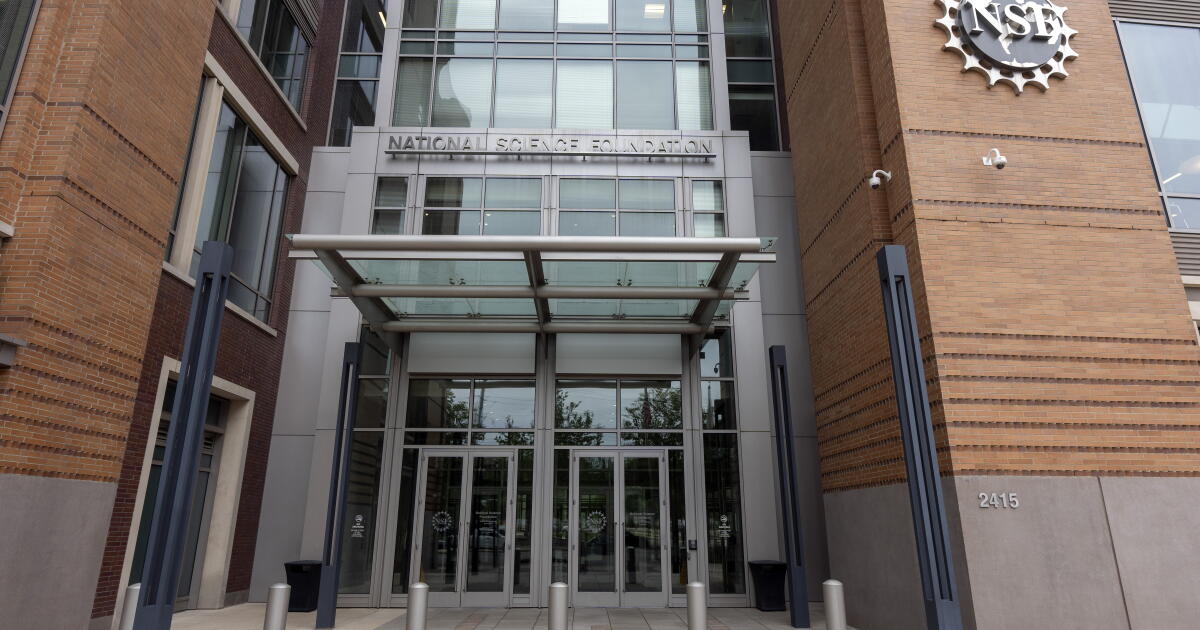
Experts say Democratic majorities in the House and Senate are likely to zero in on the National Science Foundation. The NSF has long supported basic science research that the private sector can build on. Trump has tried to cut NSF budgets, shrink its staff and redirect resources to American researchers, versus scientists from outside the U.S.
Freedman said grantmaking has slowed dramatically, but Congress still has “the power of the purse” and oversight powers that lawmakers can use to push for changes.
Democratic control will also give lawmakers more power to investigate how the administration has handled disasters and federal agencies.
Expect far more scrutiny of FEMA, including hearings and demands for information from lawmakers representing disaster-stricken districts, according to former FEMA Deputy Administrator for Resilience Daniel Kaniewski, who served during Trump’s first term.
Under federal law, the president ultimately decides whether to unlock FEMA recovery funds after a disaster strikes. Trump has denied requests from blue-state governors. Lawmakers who opposed FEMA job cuts, program cancellations and proposals to dismantle the agency will have far more leverage once Democrats take control of Congress in January.
“I would argue that it would be incumbent upon members of Congress to question a decision like a disaster not being declared in their district,” Kaniewski said, but Trump won’t be legally obligated to provide an answer.
Despite new oversight, the Trump administration may choose to press ahead with big restructuring plans that were already in the works. Staff from the National Park Service and the U.S. Fish and Wildlife Service were expected to meet this week to discuss a “realignment” effort, according to the Washington Post.
At the National Weather Service, attention is likely to turn to staffing and funding after two years of cuts and departures.
The weather service has bipartisan support in Congress. But Ronald Morales, a former agency meteorologist in Charleston, S.C., said its budget of $1.46 billion barely kept pace with inflation during his 33-year career, which ended in the last winter.
Hundreds of weather service employees left in 2025 through layoffs, retirements and exit incentives aimed at shrinking the federal workforce. The losses ran so deep that the agency later began hiring again to rebuild depleted offices. Budgets remain severely squeezed.
With Democrats leading Congress, the weather service is more likely to get a cash infusion. “We are very much a political animal,” Morales said last week. “We shouldn’t be, but we are.”
Rosenthal writes for Bloomberg.
The post U.S. midterms bring new focus to weather and science in Washington appeared first on Los Angeles Times.