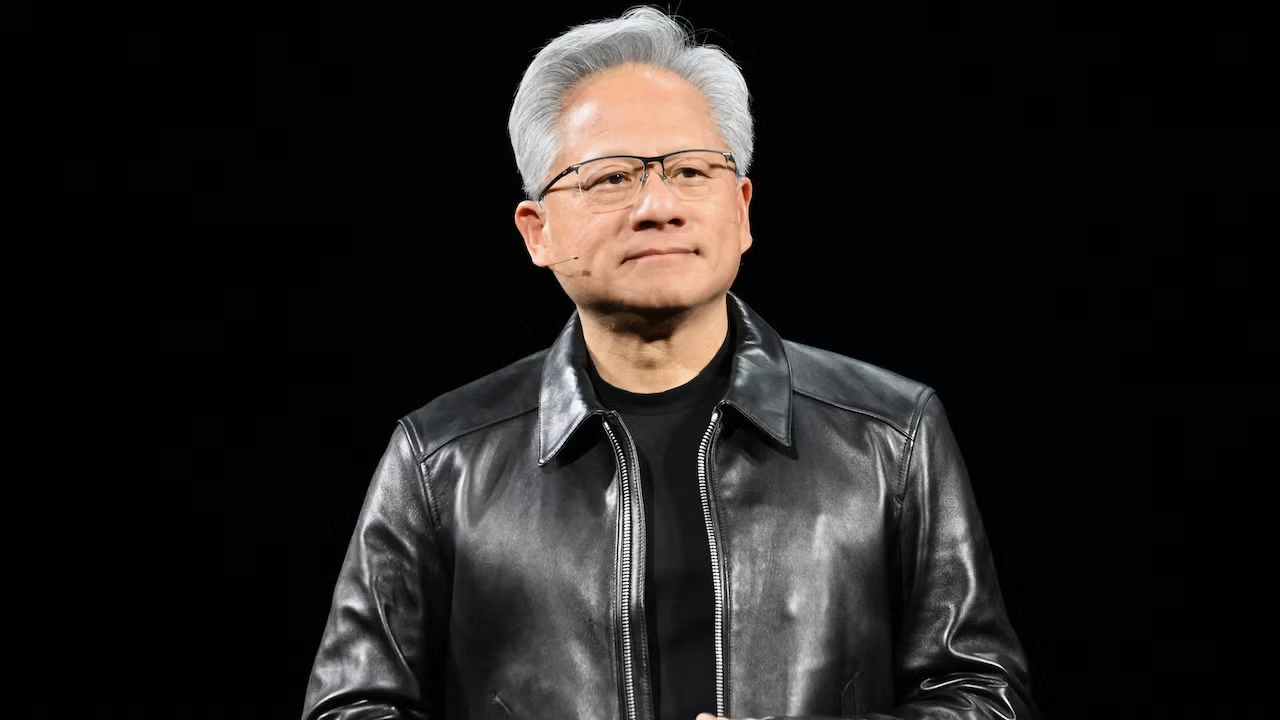
A torrid affair between one of the world’s most important tech CEOs and a suspected Chinese spy with the fate of artificial intelligence in the balance — it sounds like a compelling pitch for a new action thriller, but real life proves to be far more shocking.
On Sunday, Jensen Huang, CEO of the world’s leading AI chip supplier Nvidia, admitted to having an affair with a Chinese businesswoman, Alice Huang (no relation), who the New York Times previously reported was an intelligence asset for Beijing.
Nvidia’s Huang was put under investigation by his board, but he remains in the job.
What does this mean for the race to dominate AI?
Because of Nvidia’s central role in the AI revolution, this timeworn scandal goes beyond a simple matter of a CEO stepping out on his wife. Much of the universe of leading AI models orbits around Nvidia, since it’s a key supplier of the sophisticated processors required for all that training. Huang himself has been a key promoter of the need for continued development and is seen as the face of the U.S. efforts to win the AI race.
Experts who talked to TheWrap said that from a supplier perspective, little will change; demand for AI components continues to be sky-high and many of the contracts are already locked in for multiple years. The fallout on the geopolitical side, however, could be much more significant. The U.S. government has spent years trying to prevent China from getting access to the most advanced American chips, with both countries locked in a frantic race for AI superiority.
Nvidia will almost certainly fall under more intense government scrutiny, particularly with the Democrats poised to take over Congress in January.
“Near term, this is a governance and political-risk story, not a demand story,” said Patrick Moorhead, an analyst at Moor Insights & Strategy.
For now, Nvidia is sticking with a business-as-usual approach, even if it faces many questions about its business and its longtime leader.
“Today’s news will not slow Nvidia,” said a company spokesman. “Jensen is committed to continuing to lead Nvidia as CEO without interruption.”
What happened?
The controversy initially broke out on Oct. 29, when the New York Times reported that Nvidia’s Huang was a target of a Chinese spy plot. The outlet said the executive had a “close relationship” with Alice Huang, a former executive of a Singapore-based cloud computing and data center company called Megaspeed International (the company didn’t respond to a request for comment). On Friday, the Times followed up by reporting that Alice Huang served as a spy for China’s Ministry of State Security, while the Financial Times later added that the U.S. government believed the relationship was “romantic.”
Intelligence officials feared she had set up a honeytrap, gathering information on AI chips and technology from Jensen, and influencing his judgment over whether Nvidia should sell its components to China (something he’s been a proponent of in the past).
It was on the heels of these reports that Jensen Huang admitted to the affair.
“I was unfaithful to my wife. My actions hurt her and our children,” he said in a message shared with Nvidia employees on Sunday. “There is no excuse for what I did. I am deeply sorry.”
Later in the message, he added: “Regarding the national security concerns raised in news reports, Nvidia’s board of directors has initiated an independent investigation. I support the investigation and will cooperate fully. I love our country and our company. I am committed to protecting Nvidia and supporting America’s national security. I am proud and grateful to be an American.”
The other major bombshell from the reporting was this wasn’t a recent revelation. President Trump was briefed about the relationship between Alice Huang and Jensen Huang roughly a year ago, according to the Times. But Trump was reportedly wary of disrupting sales of Nvidia processors, with the company’s success so critically tied to the wider market.
Nvidia shares fell 4.4% to $178.45 on Monday, although the Nasdaq rebounded 3% after a massive sell-off last week amid AI concerns.
What does this mean for the broader AI industry?
Nvidia’s role as a central player in AI underscores why this is such a sensitive situation. It’s also why Trump was likely reluctant to rock the boat. Much of the U.S. economy is tied to the fate of a few big tech companies investing in AI, and those companies are reliant on Nvidia’s processors to keep making their advances. The Santa Clara, Calif., company wields unusually massive power.
As such, this controversy is a blip for the broader ambitions of the tech giants like OpenAI, Anthropic or Google — at least in the near term and from a supplier perspective. Nvidia itself is locked into multiyear agreements with many of these companies, and this controversy won’t change those relationships.
“Nvidia’s order backlog is years long, so there’s no short-term danger for the actual business, but how those chips get allocated can certainly change,” said Avi Greengart, an analyst at Techsponential.
It’s a different story for the company.
What does it mean for Nvidia?
Nvidia will now be under the microscope for how it conducts business.
Huang himself has been a vocal opponent of the U.S. restrictions banning Nvidia (and other players) from selling to China.
“I think we made a mistake, and this mistake is hard to unwind,” Huang said in an interview with Bloomberg’s Emily Chang of the restrictions. “They’re not our enemies.”
Now all of his past comments and business decisions will be viewed through the lens of this romantic relationship and what influence Alice Huang held on the powerful executive.
“No matter what the outcome from the U.S. government and Nvidia’s board inquiry, this is an enormous distraction for Nvidia management,” Greengart said.
Huang, known for wearing leather jackets and muscle tees during his public appearances, had a cult following even before the AI explosion, and has only seen his prominence and influence grow over the last several years. That’s all now in jeopardy as he and Nvidia take a massive hit in credibility.
Does anyone stand to gain from this controversy?
Nvidia has had a lock on the high-end processor market (you can thank it and AI demand for the reason why phones, computers and every other chip-powered gadget has gotten more expensive over the last few years), so the controversy could have AI companies looking more closely at other vendors.
They included Google, which is ramping up production of its Tensor Processing Unit, Amazon’s family of chips such as AWS Trainium and AMD’s AI chips.
Most of the major AI players like OpenAI and Anthropic already source from different vendors, so the immediate impact is likely minimal.
Any other fallout?
Huang’s close relationship with political leaders like Trump could also be under the spotlight, noted Alex Kantrowitz, founder of tech newsletter Big Technology, who said the president and Huang’s phone calls and emails would be something the Chinese government would be keen to see.
“The real damage from the affair could’ve been done via sloppiness vs. explicit leaks,” Kantrowitz said in his newsletter.
The suspected spy games could also embolden Congress to make restrictions on AI equipment even more firm. The Chip Security Act has been proposed to prevent the smuggling and diversion of advanced AI systems and chips to foreign adversaries such as China, Russia and Iran. The AI OVERWATCH Act also aims to control the expert of AI chips to hose countries.
The other impact is AI losing its biggest and — until now — its most credible boosters.
“Jensen is the product strategist, the closer with the big cloud companies and the face of the company in Washington and Beijing, and there’s no named successor,” Moorhead said.
For now, Huang doesn’t sound like he’s going anywhere.
“Leading Nvidia is the privilege of my life,” he said. “My responsibility is to serve you and be worthy of your trust. I have fallen short of that responsibility. I am fully committed to Nvidia and will work to earn back your confidence.”
The post Nvidia’s CEO and the Chinese Spy Honeytrap: What Is Going on With AI? | Analysis appeared first on TheWrap.