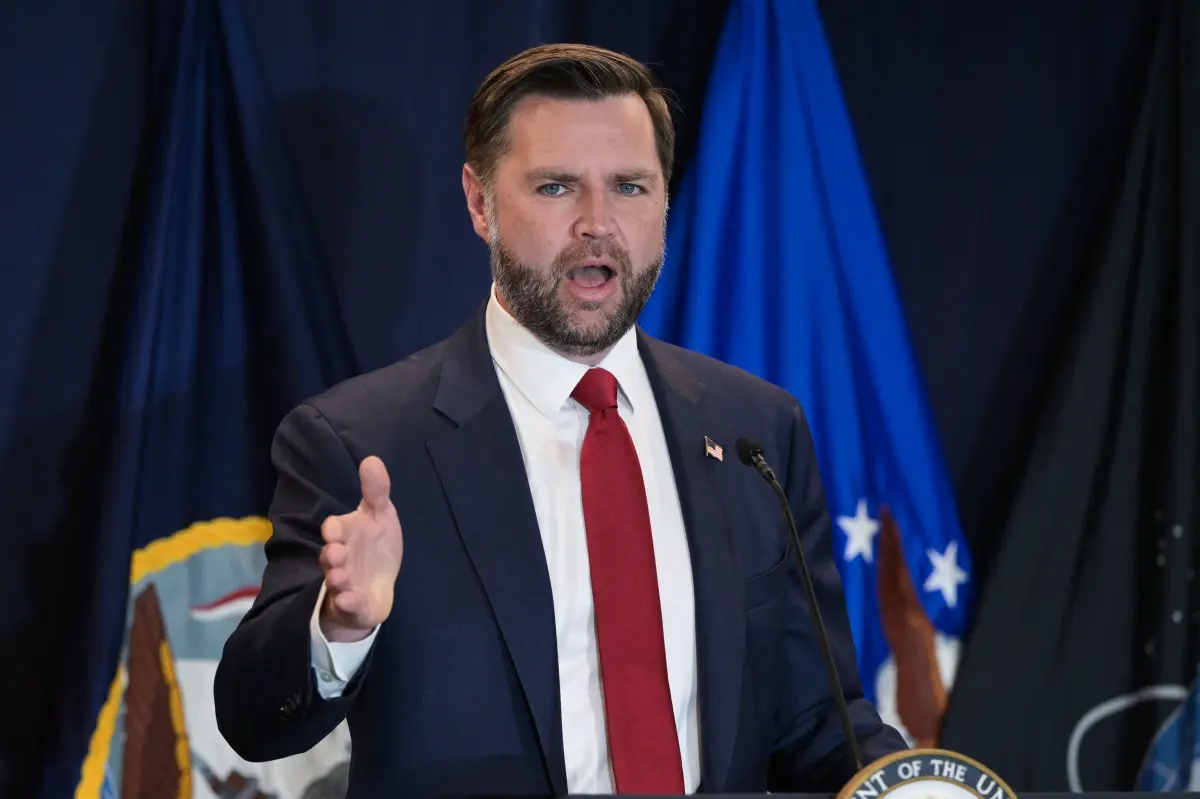

JD Vance may have many ambitions, but being the next Hubert Humphrey probably isnât one of them.
During his 1968 presidential campaign, the Democratic vice president couldnât escape the shadow of the Vietnam War vigorously prosecuted by the incumbent, Lyndon Baines Johnson, despite his private doubts about it.
Now, the Iran war isnât Vietnam and will probably end prior to the 2028 election, but Vance still might want to bone up on how Humphrey tried to balance achieving independence from the policy of an administration he served and provoking the ire of the sitting president of his own party.
Humphrey ultimately went his own way late in the 1968 campaign, calling for a bombing pause, but went down to electoral defeat nonetheless.
Vance made his own semi-declaration of independence from the Iran war last week.
He couched it in political punditry, posting on X that the war was to blame for the GOP midterm defeat.
This set off a furious intramural debate on the right over how to interpret the midterm debacle, and whether Vance was being âdisloyalâ to his boss or advancing a view that Trump himself largely shares.
President Donald Trump, too, has said Iran hurt, so thatâs not the potential fault line here; it is whether or not the president botched one of the most consequential decisions of his presidency by launching the Iran war last February.
In an extraordinary passage in his X post, Vance wrote disparagingly of defenders of the war: âIf you’d like to argue it was worth it, that losing the Senate for the next 6 years was worth it, then do so.
âArgue it was a worthwhile cost to pay. Agree or disagree, that’s at least honest.â
The vice president clearly had in mind the hawkish pundits for whom he has ill-concealed contempt, but you know who has been making exactly the pro-war argument that Vance so scorns?
The president of the United States, upon whose favor Vanceâs political prospects depend.
Since the vice president published his post, Trump has repeatedly said that war was the right decision, that he would do it again, and that history will judge him favorably for it.
Heâs gone further and proclaimed that the one thing that Vance left out of his post was saying that itâd be the right call to go to war if they had it do all over again â something Vance clearly doesnât believe.
Elsewhere in his post, Vance made a pointed nod to critics of the war: âTo the people who are pissed off and want to say, âI told you soâ: youâre right, you did tell us so. Take that energy into electing Republicans who share your worldview.â
These people, one assumes, include the isolationists on the right who have slammed Trump for betraying his movement by going to war â but are supportive of Vance.
The vice president is encouraging them to gain influence in the party, presumably for the purpose of stopping a Republican president from ever doing again what Trump has done.
Itâs almost never easy for a VP to handle his relationship with the sitting president as he makes his own bid for the White House â and this will be doubly so dealing with a figure as personally dominant and mercurial as Donald Trump.
On top of this, being in a different place on a hugely important policy question with fraught ideological implications is particularly treacherous.
Perhaps Vance finds a way to cleverly finesse this issue, or Trump changes his mind about the war, or other considerations prevail.
All of this is possible â and yet the ghost of Hubert Humphrey is obviously in the room.
X: @RichLowry
The post The ghost of VPs past haunts JD Vance — and puts his political future at risk appeared first on New York Post.