Economy
-

The job market is so bad, workers now think they have worse odds of finding a role than during the pandemic
Job prospects during the pandemic were grim. After all, companies shuttered their windows, business went online, and recessionary forces put most hiring on ice. Of course, most job hunters at the time felt as though the job market was frozen solid. But now, job hunters across the country actually feel worse than they did during…
-

‘Good for Russia, good for China, bad for America’: how the Iran war is reshaping global economies and power
The missiles may eventually stop for good. Oil tankers will once again pass through the Strait of Hormuz. But even if the tenuous two-week ceasefire gives way to a lasting end to hostilities, the world economy that emerges from the Iran War will bear little resemblance to the one that entered it. That is the…
-
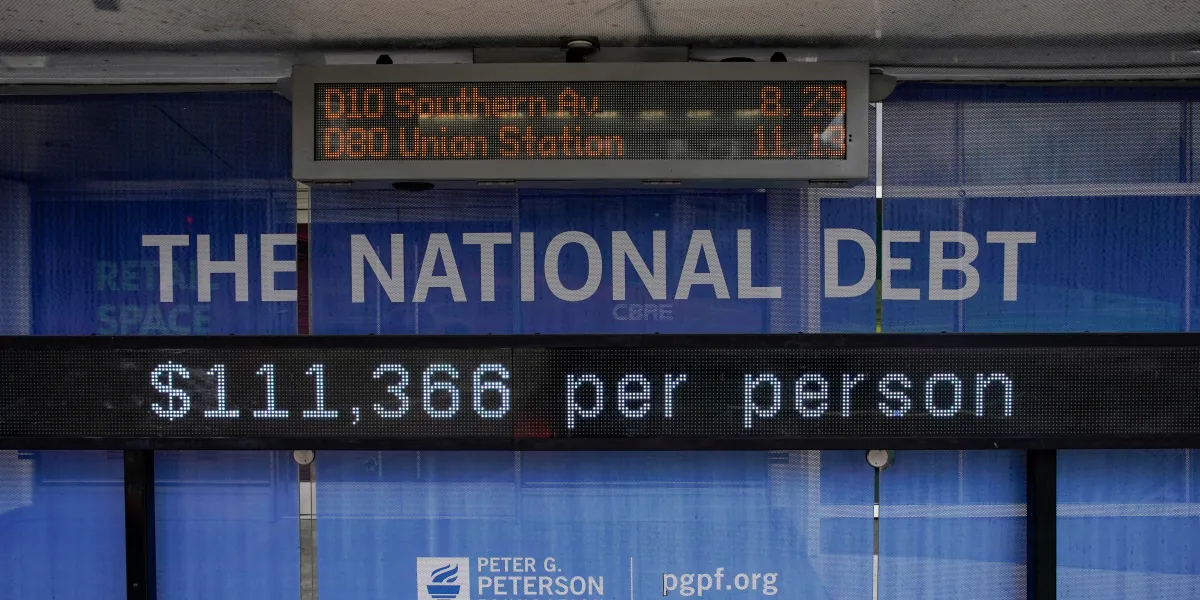
‘We owe it to the next generation’ to get national debt under control, says think-tank boss, as U.S. borrowing hits $1.2 trillion in just six months
The Congressional Budget Office’s latest monthly budget says the U.S. government operated at a deficit of $1.17 trillion for the first six months of the fiscal year—from October 2025 to March 2026. While the deficit is smaller than the shortfall for the same period last year, thanks in part to President Trump’s tariff regime, the…
-

The world’s 500 richest people made more than a quarter trillion yesterday as volatile markets react to fragile Iran war ceasefire
Wall Street traders saw a huge surge yesterday, and the world’s wealthiest billionaires had their best day in nearly a year, after President Donald Trump took back his threat that “a whole civilization will die tonight” on Tuesday, quelling traders’ fears. The world’s 500 richest people made $265 billion yesterday, according to the Bloomberg Billionaires…
-

Americans hate the economy so much, they’re buying $22 smoothies
Americans are skipping restaurant dinners, delaying car purchases and scouring for grocery deals. Amid tariff anxiety and broader stress over affordability, consumer confidence has dropped to levels not seen in over a decade, according to The Conference Board, a business think tank. At this point, it’s wealthier consumers who are powering the bulk of spending…
-

U.S. government is spending $88 billion a month in interest on national debt—equal to spending on defense and education combined
The problem with an increasing debt burden is that it costs more to maintain it: This is precisely the issue with which the U.S. Treasury is wrangling at present. As total U.S. national debt ticks over $39 trillion, the interest payments on that value are eye-watering: $529 billion for the first six months of the…
-

Why Trump’s 2027 budget could be the document that triggers a debt crisis
America’s long-term budget outlook just got a lot scarier. If the bond vigilantes are already circling, and if they’re looking for more reasons to dump U.S. bonds and push Treasury yields to crisis levels, they need do nothing more than read the newly issued Budget of the U.S. Government for Fiscal Year 2027 (starting Oct.…
-

‘You can never really catch up’: The Iran War is exacerbating already high grocery bills and it will only get worse if the war continues, experts say
The U.S., Israel, and Iran agreed to a two-week ceasefire on Tuesday, but the sticker shock you’ve been feeling every time you go to the grocery store will get worse if the war continues. One of the first places you’ll feel it will be the produce aisle, experts say. A Fortune analysis of produce wholesale…
-

$1.5 trillion relief rally erupts on Wall Street after Trump hits pause on Iran strikes
Five weeks of held breath just exhaled from the U.S. stock market this morning, and it was worth about $1.5 trillion. The rally caps a frantic 24 hours. On Sunday, Trump set an 8 p.m. Tuesday deadline for Iran to reopen the Strait of Hormuz or face strikes on its bridges, power plants, and what…
-

U.S. had a national debt ‘home run’ in its grasp, says Jamie Dimon—but the government did nothing, and now its best option is crisis management
The U.S. national debt stands at more than $39 trillion, with interest paid on the debt now amounting to more than $1 trillion a year. Before too long, that figure will double. What this borrowing (and its related interest payments) will ultimately mean for the economy remains to be seen: Theories range from a market…